
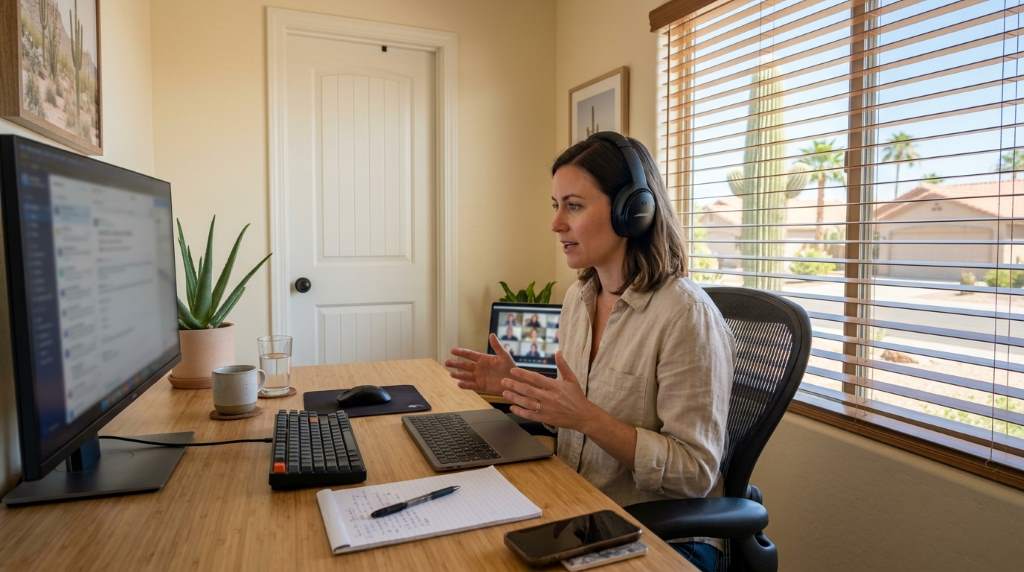
Working remotely in Phoenix, AZ comes with a unique set of challenges that most online guides completely ignore. According to a 2023 Buffer report, 22% of remote workers struggle with distractions as their top productivity challenge. Additionally, a Stanford study found that remote workers can be 13% more productive but only when they actively manage their environment. If you are job hunting or interviewing from home, applying solid remote interview success strategies can make a significant difference in how you present yourself professionally. Phoenix’s desert climate, lifestyle pace, and urban sprawl create distraction triggers that are completely different from those in other cities.
Understanding Phoenix-Specific Distraction Triggers
Phoenix is not your average remote work city, and its environment shapes your daily focus in ways that most people overlook. The extreme summer heat regularly hitting 110°F or higher drives people indoors, making your home both your refuge and your workspace simultaneously. This overlap between comfort space and work space blurs boundaries faster than in cooler climates. Furthermore, the Valley of the Sun’s booming population means more neighborhood activity, construction noise, and delivery traffic throughout the day.
Seasonal monsoon storms between July and September add another layer of disruption unique to Phoenix. Heavy rain, sudden thunder, and power fluctuations can interrupt your remote sessions without any warning. Many remote workers in the area report losing focus or connection during these storms, which are intense but brief. Therefore, understanding the local weather calendar helps you plan your most critical sessions on clearer days.
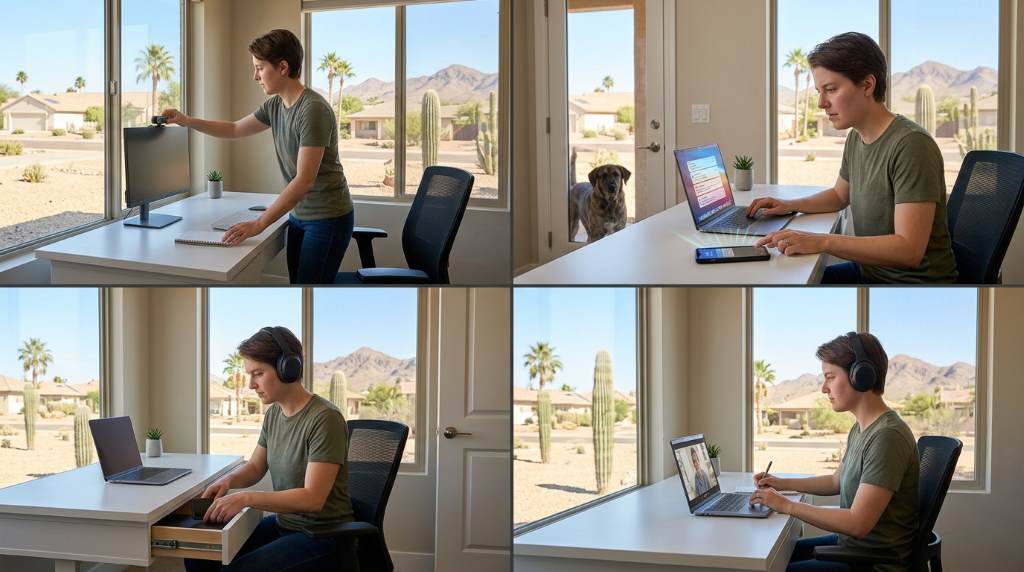
Phoenix also has a car-centric culture, meaning street noise from busy roads like Camelback or Indian School can seep into your home office. If you live near a major intersection or light rail corridor, ambient noise becomes a constant battle. Fortunately, knowing this ahead of time lets you choose the right room in your home for your workspace. Positioning your desk away from street-facing windows makes a measurable difference in your session quality. Professionals exploring alternative career paths in dynamic industries also face similar remote work setup challenges as they transition into new roles.
Setting Up a Distraction-Free Physical Environment
Choose the Right Room Based on Heat and Light
In Phoenix, sunlight is intense and relentless for most of the year. West-facing rooms become ovens by mid-afternoon, which affects both your comfort and your camera lighting on video calls. Instead, choose a north or east-facing room that stays cooler and receives indirect natural light. This simple adjustment reduces both physical discomfort and visual distractions from harsh glare.
Optimize for Sound in a Hot Climate
Thick walls and double-pane windows help with both heat insulation and sound blocking in Phoenix homes. If your home has these features, use them deliberately by setting up in rooms with those upgrades. Additionally, running a white noise machine or ceiling fan at a low hum masks neighborhood sounds without being disruptive. Avoid using air conditioning as your only sound solution, since older HVAC units in Phoenix can be surprisingly loud during peak operation.
Create a Visual Boundary Within Your Space
Remote sessions require a professional-looking backdrop, and Phoenix living spaces often feature open floor plans that create visual clutter on camera. Use a bookshelf, a simple curtain, or a room divider to create a defined “session zone” within a larger room. This boundary also signals to household members that you are in a focused session. Consistent visual cues train both yourself and others to respect your work time.
Managing Digital Distractions During Sessions
Use Focus Tools Designed for Long Sessions
Tools like Freedom, Cold Turkey, or the built-in Focus Mode in Windows and Mac help block distracting apps and websites. Schedule your digital focus blocks to coincide with your core work hours, typically between 7 AM and 11 AM in Phoenix before the heat peaks. During these hours, your cognitive energy is also at its highest, making deep work sessions more effective. Moreover, combining app blockers with phone-free zones removes the temptation to scroll between tasks.
Manage Notifications Strategically
Push notifications are one of the most studied causes of focus breaks during remote sessions. Research from the University of California, Irvine, found that it takes an average of 23 minutes to fully regain focus after an interruption. Therefore, silencing all non-essential notifications during your scheduled sessions is not optional it is necessary. Use Do Not Disturb settings across all devices and communicate your unavailability to colleagues in advance.
Leverage Phoenix’s Time Zone to Your Advantage
Phoenix operates on Mountain Standard Time year-round because Arizona does not observe Daylight Saving Time. This quirk means that for part of the year, Phoenix is aligned with Pacific Time, and for another part, it aligns with Mountain Time. Remote workers can use this time zone flexibility to schedule deep focus blocks before East Coast colleagues come online. Starting your session at 6 AM MST lets you accomplish hours of uninterrupted work before the virtual meetings begin.
The Unique Challenge of “Desert Monotony” and Mental Distraction
Here is a discussion you will rarely find in other remote work blogs: Phoenix’s landscape can contribute to a psychological state known informally as “desert monotony.” The consistently sunny skies, uniform terrain, and repetitive suburban layouts can quietly reduce mental stimulation over time. Without visual variety, the brain begins to seek novelty through digital distractions especially social media and news cycles. This is not a personal weakness; it is a documented response to low-stimulation environments.
To counteract this, intentionally introduce micro-stimulation breaks during your workday. A five-minute walk around the block before 9 AM, when temperatures are manageable, resets your visual input and refreshes mental clarity. Rotating your workspace décor monthly even with something as simple as a new plant or desk accessory gives your brain subtle novelty without disrupting your setup. Additionally, investing in outdoor plants suited to the desert, like agave or desert rose, creates a calming visual anchor outside your window. Building a workspace culture that keeps people engaged is equally important, and strategies around improving employee engagement and social value can also apply to remote-first individuals managing their own motivation.
Building Household Routines That Protect Focus Time
Set Clear Expectations With Household Members
Whether you live with family, roommates, or a partner, communication is the first defense against household interruptions. Hold a brief weekly conversation to share your most critical session windows for the coming days. Use a simple visual signal like a closed door or a small “on air” sign to indicate when you are in an active session. Consistent routines reduce the need for repeated reminders over time.
Schedule Around Phoenix’s Peak Activity Hours
In Phoenix, household activity patterns shift around the weather. Deliveries, lawn crews, and pool maintenance services often operate in the early morning to avoid afternoon heat. If you know your neighborhood’s rhythm, you can schedule your highest-focus sessions after the morning service rush ends, typically by 10 AM. Planning around these predictable patterns removes a significant and often overlooked source of household noise.
Use the Quiet Afternoon Window Strategically
Between 1 PM and 4 PM in Phoenix during summer, outdoor activity drops sharply because of extreme heat. This creates an unintentional quiet window in most residential neighborhoods that remote workers can capitalize on. Use this period for your second deep focus block of the day after a midday reset. Furthermore, closing blinds during this window keeps your room cooler and reduces glare, naturally encouraging a focused session environment.
Technology Setup That Prevents Session Disruptions
A stable internet connection is non-negotiable for remote sessions, and Phoenix’s rapid growth has led to both infrastructure improvements and network congestion in some areas. Use a wired Ethernet connection whenever possible instead of relying solely on Wi-Fi during important sessions. Contact your provider about upgrading to a business-tier plan if you experience frequent drops during peak hours. Additionally, having a mobile hotspot as a backup ensures that sudden outages never cancel a critical meeting.
Invest in a quality headset with active noise cancellation to handle both external sounds and HVAC noise. Phoenix homes with tile flooring and stucco walls create echo-prone environments that standard laptop microphones struggle to manage. A good headset solves both the echo issue and background noise simultaneously. Finally, test your setup before every important session not just at the start of each week to catch technical issues early.
Conclusion
Avoiding distractions during remote sessions in Phoenix, AZ requires both universal best practices and city-specific strategies tailored to the desert climate, lifestyle, and urban environment. From managing monsoon disruptions to countering desert monotony, the solutions here go beyond generic productivity advice. Start by auditing your current workspace against the environmental factors unique to Phoenix, then implement changes one layer at a time. The local real estate market is also shifting in ways that affect how people set up home offices, and understanding how local markets are reshaping residential spaces can help you make smarter long-term decisions about your workspace. Take action today even one change to your physical setup or daily routine can transform the quality of your remote sessions.
Frequently Asked Questions
How does Phoenix heat affect remote work focus?
Extreme heat drives more people indoors simultaneously, increasing household noise and blurring the line between comfort space and workspace, which directly harms focus.
What is the best time to schedule remote sessions in Phoenix?
Early morning between 6 AM and 10 AM offers the coolest temperatures, least neighborhood activity, and the highest personal cognitive energy for focused sessions.
How can I reduce echo during video calls in a Phoenix home?
Adding soft furnishings like rugs, curtains, and cushions absorbs sound reflection caused by tile floors and stucco walls common in Phoenix-area homes.
Does Arizona’s time zone help remote workers avoid distractions?
Yes, because Arizona does not observe Daylight Saving Time, remote workers can schedule deep focus blocks before East Coast colleagues log on, creating natural interruption-free windows.
What backup should I have for internet outages during remote sessions?
A 4G or 5G mobile hotspot from a major carrier provides a reliable backup connection during the occasional power or internet disruption caused by Phoenix monsoon storms.